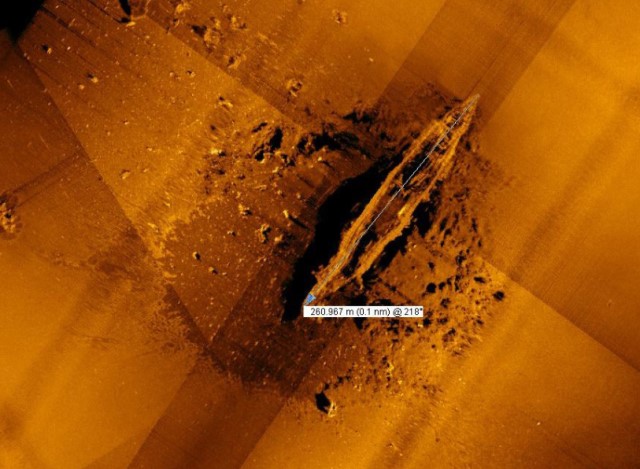
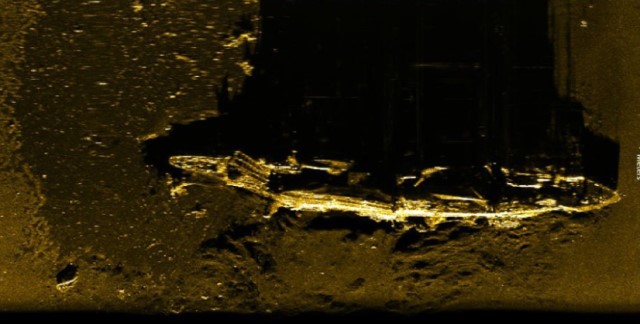
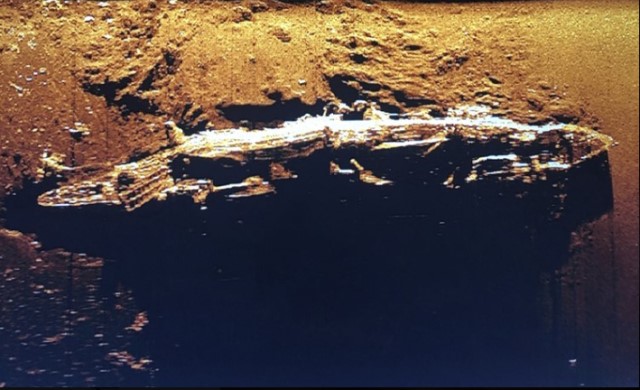
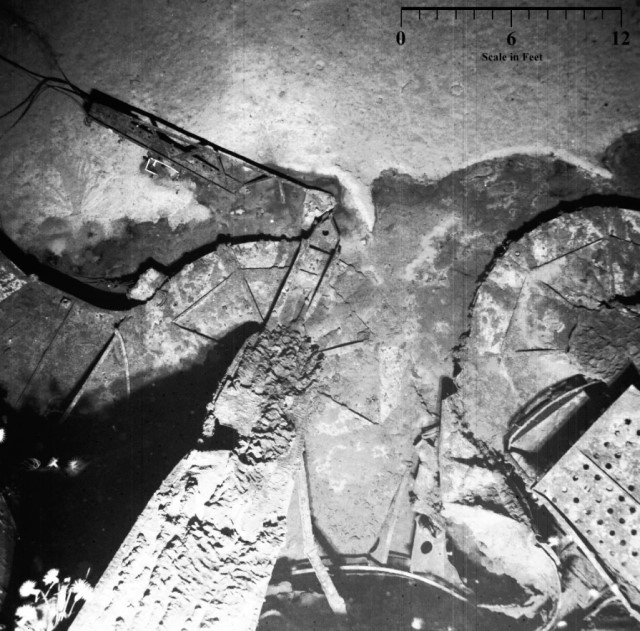
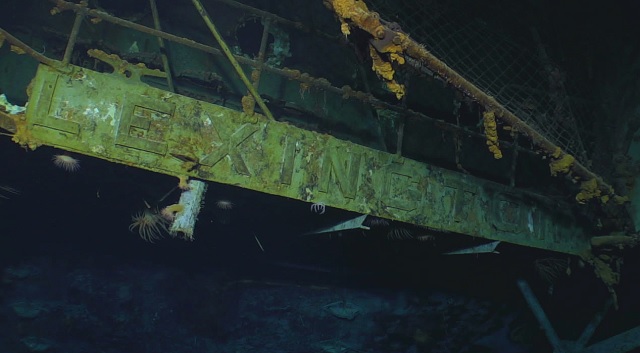
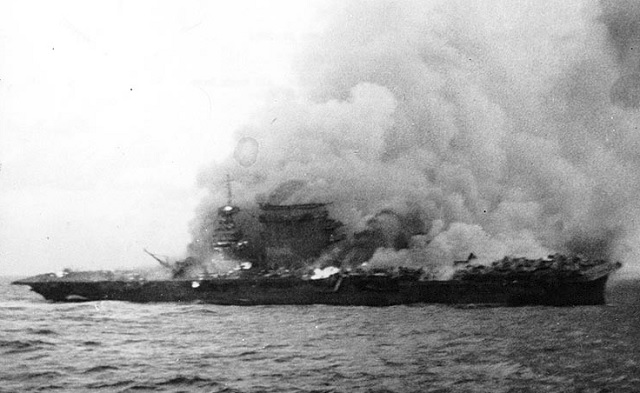
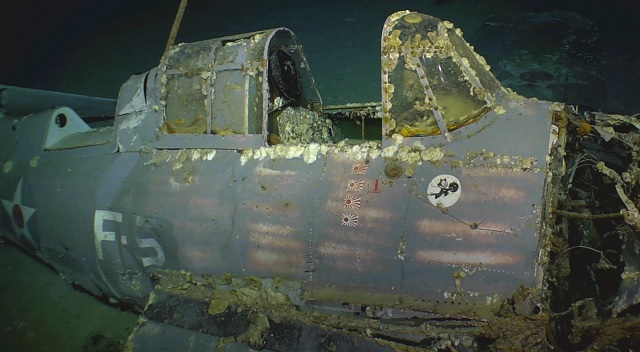
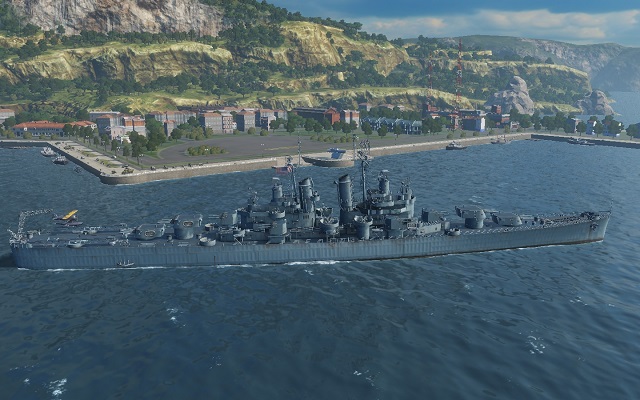
GOTCHA!
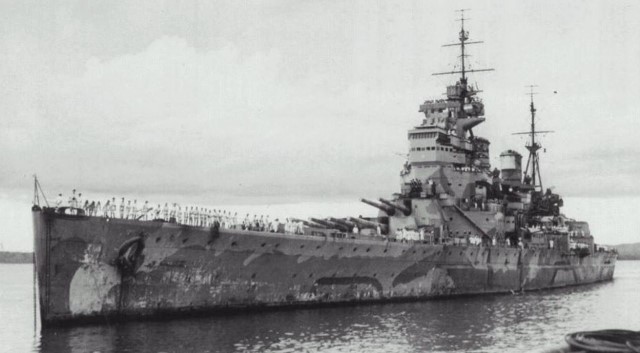
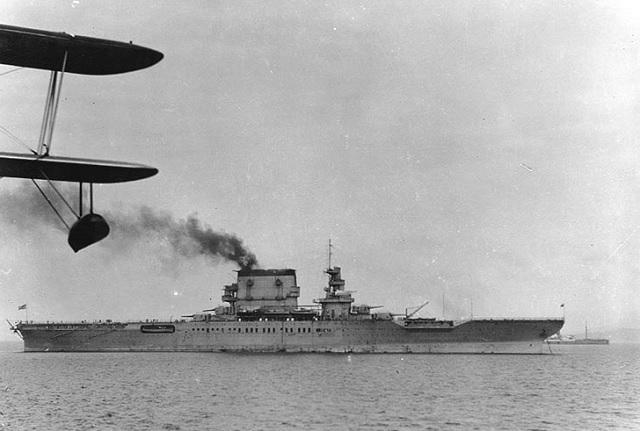
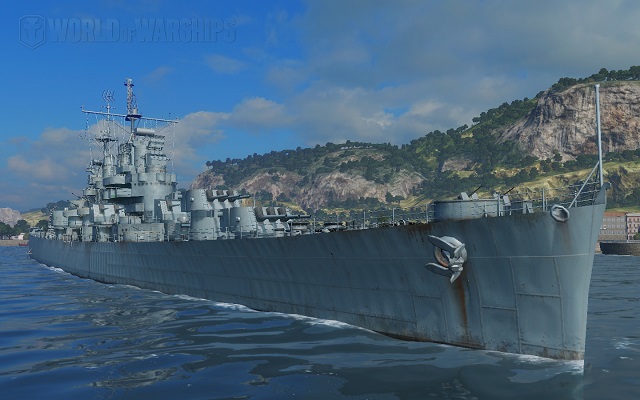
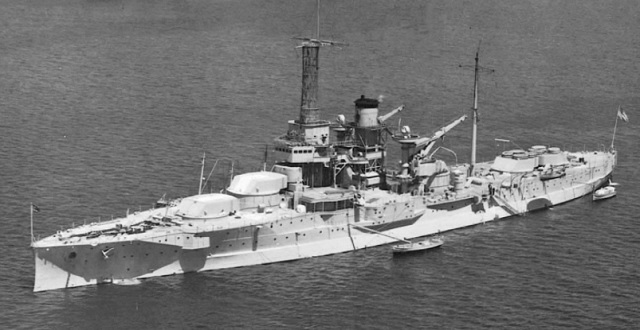
The USS Phoenix (CL-46) was a Brooklyn-class light cruiser built for the US Navy in 1938. She was considered a light cruiser because her main armament consisted of 6" guns; 8" rifles were the hallmark of the heavy cruiser. However, there weren't many ships of any fleet that would want to get within range of a Brooklyn: she carried fifteen Mark 16/47 guns in five triple turrets. While that armament wouldn't sink a battlewagon, it'd chew the upperworks to pieces.
The Phoenix had an adventuresome war from the get-go. She spent nearly the entire time in the Pacific (other than a quick run to Casablanca in 1943, to deliver SecState Cordell Hull to a meeting), and was at Pearl Harbor on December 7th, 1941. She herself suffered barely any damage throughout the conflict, losing only one man to enemy action (near as I can tell, that is). When the Surrender was announced, she was heading to the US for a refit. She then officially joined the Atlantic Fleet just long enough to be transferred to the Reserve Fleet (Philadelphia) in 1946. Where she sat until 1951, which is when she was sold.
To Argentina, who renamed her ARA 17 de Octubre. Shortly after the coup that overthrew Juan Peron, the Argentinian Navy gave her the name under which she became famous:
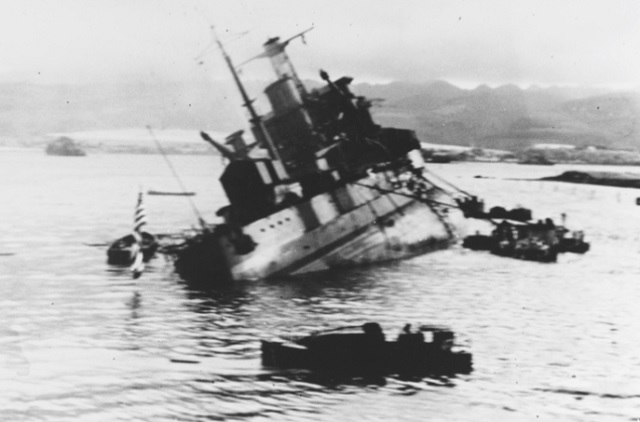
The General Belgrano. During the Falklands War, on May 2nd, 1982, she was involved in maneuvers against the oncoming fleet of Royal Navy ships. Thought to be part of a pincer operation with the 25 de Mayo, an ex-RN CVL carrying A-4 Skyhawks, if the Belgrano could close with the thin-skinned RN vessels, there'd be serious butchery at sea. Modern vessels aren't armored the way they used to be; the Belgrano was built like a bank vault in comparison to the Type 42 destroyers and the various frigates she'd be facing. She was a serious threat. And the Brits had a serious way of dealing with her: the nuclear-powered submarine HMS Conqueror, which had been shadowing the Belgrano for 36 hours. Once given the go-ahead, she fired three WWII era torpedoes at the cruiser.
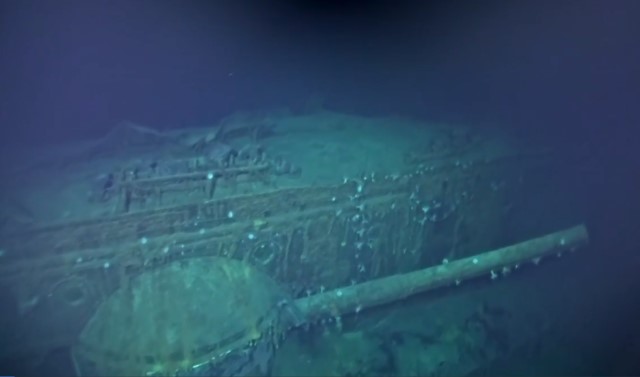
The second hit her forward of "A" turret, carrying away 40 feet or so of her bow. The third missed altogether, though it carried on and dented an Argentinian frigate (no explosion) some distance away. The first torpedo hit just behind the side armor plating, penetrated into the hull of the ship, then detonated. The explosion vented the boiler room to the sea, which began flooding immediately. It also blew out vertically, destroying two mess halls and a recreational area before taking out a 60 foot chunk of the main deck.
After her remaining crew had abandoned ship, the General Belgrano rolled on her ends, then sunk stern first. 770 crew were later rescued, a nigh-on miraculous feat, considering that her escorts never knew she was in trouble and sailed away.
1
Max Weber is less kind to the captains of the escorts with regards to not hanging around to pick up survivors in his history of the Falklands War.
The sinking was a little controversial back when it happened. Britain had declared a "total exclusion zone" that was, IIRC, 200 miles from the Falklands and announced that it would attack any vessels in that zone; the Belgrano was outside that zone by a good bit when it was sunk. The usual suspects got the vapors at the idea, while the military thought it was daft to go to the trouble of declaring an exclusion zone and then proceed to ignore it.
Funny little war, really. Can't imagine why they seem to want another go - it's not like we have the Soviets to worry about these days, hm?
Posted by: Avatar_exADV at May 02, 2012 10:33 PM (pWQz4)
2
What was particularly weird about the reaction to the sinking was that the Brit government sent the Argentine government a letter making it clear that the war zone was NOT the exclusion zone. The exclusion zone (200 mile radius from the Islands) was there to prevent neutral shipping from wandering into the free-fire area; both sides knew that their own military vessels were targeted anywhere.
In theory, if a RN DD stumbled across an ARA frigate near, say, southern Japan, the two could immediately start shooting at each other.
There's no way the skippers of the Belgrano's escorts should be given a free pass. Not sinking (or even detecting) the Conqueror is one thing... the SSN's job is to be unheard, after all... but it's a completely OTHER thing for that WWII-era cruiser, that's ON YOUR SIDE, to be unheard while it's sinking. Bloody miracle any survivors were found, let alone 700+.
Posted by: Wonderduck at May 02, 2012 10:45 PM (6CHh4)
What is really funny is that usual suspects who claim the sinking of the General Belgrano to be illegal have largely based their case on the fact that she was heading west (i.e. Away from the ships of Operation Corporate.) when HMS Conqueror torpedoed the cruiser. But the Argentine Navy has admitted that the Belgrano and her group were simply on the westward leg of her patrol circuit, not heading back to port, and was ready to attack the British if the opportunity arose. Thus the British sinking her should not have come as a surprise to anyone.
A footnote to the story is that the Argentine operation which was suppose to have aircrafts from 25 de Mayo and the Belgrano hit the British task force was postponed before the cruiser's sinking, supposedly because the wind was too light for carrier operations. However, it appears the actual reason is that the Argentines had lost track of where the British ships were, and thus were marking time until they could be located again.
Then we have the story of the RN Sea King which ended up ditching in Chile, but that is a story for another day.
C.T.
Posted by: cxt217 at May 02, 2012 10:59 PM (YFCvg)
Avatar - it seems like the Argentines always press on the Falklands whenever the government of the time has domestic problems. That was why the Junta went for invasion in 1982.
There was also the attitudes of the British over the Falklands (There are the usual voices in Britain who call for handing the islands over to the Argentines now, as then.), and attitudes of other nations vis a vis the issue.
Mind you, the correlation of forces today would indicate the British that was less capable in some ways (The Royal Navy has one carrier.) and more in others (Tornado fighters based in the Falklands, and cruise missiles from SSNs.). But correlation of forces did not matter to the Junta in 1982 and it might not matter to an Argentine president now, both trying to save their position from internal opposition by whatever means possible. I sincerely hope President Kirchner remembers the fate of the Junta when she grandstands over the Falklands but there are strong reasons to doubt it.
C.T.
Posted by: cxt217 at May 02, 2012 11:07 PM (YFCvg)
5
At one point I thought this was the last time a submarine fired on an enemy warship and sank it.
But a couple of years ago a North Korean submarine sank a South Korean surface warship. Which damned near restarted the Korean War.
Argentine is weaker now than it was in 1982, too, so correlation of forces is probably not going to be more of a consideration now than it was in 1982.
Posted by: cxt217 at May 03, 2012 12:00 AM (YFCvg)
8
According to this chap, the British had sigint indicating that the Belgrano was headed to a rendezvous point inside the exclusion zone. They chose not to reveal this at the time in order to avoid revealing their sigint capabilities.
Personally, I roll my eyes at the thought that sinking an enemy warship in a time of war could ever be considered controversial.
Posted by: flatdarkmars at May 03, 2012 12:06 AM (I55Es)
9
They probably are encouraged to make another go at it because the president of the US tried (but failed) to refer to the Falklands by the Argentinian name. A strange choice that ranks up there with the administration official who referred to Jerusalem by the Arab name for it.
Posted by: Mauser at May 03, 2012 02:21 AM (cZPoz)
Personally, I roll my eyes at the thought that sinking an enemy warship in a time of war could ever be considered controversial.
Common sense would dictate that, but the familes of some of the Argentine crewmembers lost with the General Belgrano did try to sue the British government on the basis that the Belgrano was heading west towards Argentine, thus was not a threat to the British and therefore the British had no right to attack and sink her, which was why they demanded recompense from the British government. The number of failures in their reasoning - undermined by, among others, the Argentine navy - says volumes.
C.T.
Posted by: cxt217 at May 03, 2012 04:26 PM (YFCvg)
Name This Mystery Ship XVI
Sometimes the Mystery Ship I trot out for these contests are found long in advance, carefully stored away until the time comes to spring them on my unsuspecting readers. Other times, it's serendipitous. They fall in my lap completely by accident as I'm doing something else altogether.
FDM, CXT, you two have been moved to to "master-level," so you can't play on this one. Everybody else, take your best shot! The winner gets a post on a topic of their choice... but no cheating. If you cheat, you make little duckies cry, and big duckies angry.
Posted by: brickmuppet at May 02, 2012 06:00 PM (EJaOX)
2
Yeah, it sure looks like the Savannah to me. I was looking at French, Italian, and British cruisers, but nothing matched the 3-gun turrets, two funnels,and main deck line.
Posted by: Siergen at May 02, 2012 07:14 PM (3/gGt)
Posted by: Wonderduck at May 02, 2012 07:20 PM (6CHh4)
4
That's funny, the other night I was half-watching TV and there was a program that briefly mentioned this ship. In a context rather far-removed from the above photo, though.
Posted by: flatdarkmars at May 02, 2012 07:47 PM (I55Es)
Speaking of oddities, certain events over the last couple years had me re-reading some of the books in my collection, which fits in amazingly well with this particular ship. And it probably cover the same circumstance, or at least the period of time, FDM mentioned.
Interesting ship, that.
Posted by: cxt217 at May 02, 2012 07:56 PM (YFCvg)
6
OK, then how about the USS Philadelphia? I could've sworn that is was right over there...
Posted by: Siergen at May 02, 2012 08:00 PM (3/gGt)
9
Using Wonderduck's last hint, finding the matching photograph is trivial. The only difference that I see is that the original has a noticeable U.S. Flag, which is shopped away in this picture for some reason.
Posted by: Pete at May 02, 2012 08:51 PM (5OBKC)
10
If I get two guesses, then my last one is the USS Phoenix. I'm pretty sure that Brickmuppet got the class right, and I think I found the matching photo just before logging for bed.
Why do you have to run these on work night?
Posted by: Siergen at May 02, 2012 09:01 PM (3/gGt)
11
The flag was shooped out, Pete, to make it marginally more difficult to identify.
Siergen, I'm afraid you don't get two guesses. I declare this one to be a no-winner.
Posted by: Wonderduck at May 02, 2012 09:55 PM (6CHh4)
12
I made a few attempts to figure it out, but came up empty. The white paint led me correctly to South America, but I didn't investigate thoroughly enough, mostly because I was at work. If it was still open, I'd probably be figuring it out about now.
The white-ish paint was used quite a bit on US Navy ships deployed in the tropics during peacetime - USS AUGUSTA had a white-ish hull color scheme when she was assigned to the Asiatic Fleet, for example. The PHOENIX spent some time visiting South American ports prior to the outbreak of the war, so the photo is probably from that time.
C.T.
Posted by: cxt217 at May 02, 2012 10:42 PM (YFCvg)
Name This Mystery Ship XV
Got a toughie for you today, with an extra bonus: flatdarkmars can't play!
He can't play because he's the one that brought it to my attention... and I had never heard of it. So take your best shot, folks! Winner gets a post on a topic of their choice, with the usual limitations. Good luck!
Didn't the Japanese capture or refloat an old four piper in the early days of the war? Wasn't she the Stewart? Heard the story long time ago, but I looked her story up in DANFS and she fits the verbal (no pictures).
I could be very wrong, as usual....
Posted by: The Old Man at April 24, 2012 12:40 PM (dBz2M)
You are absolutely correct - that is IJN patrol boat PB-102, formerly the CLEMSON class destroyer USS STEWART (DD-224). One of two former Allied destroyers to be repaired and taken into IJN service during WW2, and which says a lot about the IJN's priorities and lack of resources. Depending on which source you read, she was named 'ex-STEWART' or simply 'DD-224' following her repossession by US forces at the end.
Given the different appearance of the other Allied destroyer to be captured by the Japanese during WW2, it is easy to deduce PB-102's identity.
Posted by: cxt217 at April 24, 2012 02:05 PM (buVNw)
3
Oops, my mistake. There was three Allied destroyers captured by the Japanese during the Pacific War which were put into service for the IJN. The comment about appearances still applies, though.
Posted by: cxt217 at April 24, 2012 04:16 PM (buVNw)
4
The Old Man becomes a first time winner! Let me know what topic you want! I'll admit that I thought it'd be harder...
Posted by: Wonderduck at April 24, 2012 06:39 PM (PVVuW)
1
As a dish served cold, it certainly provides fiber, but I imagine it falls short in taste.
Posted by: brickmuppet at April 06, 2012 09:41 PM (EJaOX)
2
Hmm, I had not heard of that aircraft before, but according to Wikipedia, over 1500 of them were built and they saw service in the "back corners" of the WW II. As our resident expert on the Pacific theater, perhaps you could use your new found Vengence! as a starting point for one of your excellent articles?
Posted by: Siergen at April 06, 2012 10:36 PM (3/gGt)
My Lexington Story
A couple of weeks ago, I'm walking up the hill from the main parking lot to the Duck U Bookstore trying to avoid the worst of the slippery spots, when a late-model Chrysler sedan pulled into one of the handicapped spots by the door. The driver, an elderly woman, began to get out of the car as I changed course to help her if need be. I glanced at the license plate, noticed the car's color, and began to laugh long and hard.
The woman shot me a nasty look, and I realized she probably thought I was laughing at her, not what I had just noticed. Unable to speak from laughing so hard, I did what I could: I pointed at the license plate, then waved my hand vaguely towards the rest of the car. Then she realized that I got the joke... and smiled, saying "Most people don't understand."
Chuckling, I offered her my arm, which she took gratefully. Walking into the school building the Bookstore is located in, I inquired when her husband had been in the Navy. "1944; I didn't meet him until 1950, when I was 20." Her husband passed away a couple of years ago, but she still kept the license plate the way he wanted it. After we got into the building, I bid her good day... and she thanked me for both my help and for remembering my history. "He would have talked your ear off, you know. He could do that," she said with a gleam in her eye. I replied with "I've got two," which made her laugh.
What made me laugh so much to begin with? The license plate read "CV 16 USN". The car was painted dark blue.
CV-16 was better known as USS Lexington, one of the multitude of Essex-class carriers that joined the fleet in the second half of the Pacific War. She was the only fleet carrier never to have pattern-disrupting camouflage applied to it, wearing instead Measure 21 ("Navy Blue" hull and deck overall) for the entire war. This paint scheme led the Japanese to give her the nickname "The Blue Ghost."
They also claimed to have sunk her four times. While she did take some damage during the war, it was never particularly serious. Post-war, she continued to serve until 1991, the last of the Essex-class carriers to be retired. She's now a museum ship in Corpus Christie, Texas.
CXT figured out the mystery ship, so he gets another post...
Name This Mystery Ship XIII
Here we go again! One neat thing about this ship is that I've got a personal story to tell about it...
As usual, no imagesearch or anything like that. I may not be able to prevent you from doing it, but you're less of a human being for doing so. As is usual, the first to accurately name the ship will get a post on a topic of their choice, as long as it doesn't involve religion, politics or pr0n.
I'll tell the story when an accurate ID is made. Good luck!
1
I'm guessing Intrepid. My reasoning is behind spoiler tag
Wonderduck has a personal story about this. Only 2 Essexes have been not in mothballs since he was likely able to have sea stories. I don't believe WD is a naval aviator so it would not be Lexington...thus the intrepid museum.
Posted by: brickmuppet at February 26, 2012 08:51 PM (EJaOX)
2
Your reasoning is perfectly sound, except that
the Lexington is also a museum ship. In any case, it's not the Intrepid.
Posted by: Wonderduck at February 26, 2012 09:41 PM (O9XO8)
Since it is a short-hull Essex and you got a personal story, you make it pretty much LEXINGTON as the only possible choice - unless I am completely off on your age.
C.T.
Posted by: cxt217 at February 27, 2012 04:43 PM (47Cgj)
4
OK, I like this site, but why does it keep cutting me off at the end of pages? Nearly every page does this; I can clearly see that there's more material, but it won't let me scroll the rest of the way. What the hell?
Posted by: Chris Spider at February 27, 2012 06:42 PM (EG0UP)
5
Chris - I see the same thing quite often, and have to refresh the page to see it all. I am using Firefox. Are you also using Firefox as well, or something else?
Posted by: Siergen at February 27, 2012 07:04 PM (3/gGt)
This has been an issue here for a long time. Sometimes if you reload the page it gets relaxed and lets you scroll down further.
I've found that there's less of a problem in this regard using Firefox than when using IE. But it doesn't happen at all with any other mee.nu or mu.nu blog I visit, so I can only conclude that there's something custom and strange in the site CSS here.
Posted by: Steven Den Beste at February 27, 2012 07:20 PM (+rSRq)
7
If there is, I sure didn't put it there! Chris, it even happens to me, usually on the longer posts with many pictures. I'm sorry, I wish I knew what was going on, but it's been occurring pretty much since Day Two.
Posted by: Wonderduck at February 27, 2012 07:37 PM (O9XO8)
8
We discuss this from time to time. I add explicit height to every picture tag (img), without exception, and that seems to help.
Posted by: Pete at February 27, 2012 07:44 PM (5OBKC)
9
Perhaps the browsers can't handle this much duck content in one page fetch?
Posted by: Siergen at February 27, 2012 08:01 PM (3/gGt)
10
Pixy knows about the bug, it has something to do with the dynamic footers. When I asked about it he fixed it for my site by disabling something, but I never asked exactly what, and if it was under my control or not.
Posted by: David at February 27, 2012 09:19 PM (Kn54v)
11
I was testing it on my site on the weekend, and just turning it off doesn't always work if you have a long sidebar, so I need to re-do the CSS. What I was trying to do in 2008 with this fiddly Javascript is a lot easier today, so long as I throw IE6 to the wolves.
Posted by: Pixy Misa at February 27, 2012 11:12 PM (PiXy!)
2/23/45
The single most famous picture from WWII was taken some 67 years ago today. The sad thing is that most people today don't realize that this wasn't the end of the fighting... oh no. Two of the men in the picture were dead a week later. A third was killed a few weeks after the first two. The island of Iwo Jima was declared secure over a month after Joe Rosenthal took the picture.
27 Medals of Honor were earned at Iwo Jima, 13 posthumously. 22 of the Medals were issued to US Marines, nearly 30% of all Medals of Honor earned by Marines in WWII.
You may remember that a few days ago, I had some broadband issues. The powers that be sent a technician to the apartment complex, so as to discover just what was going on. I gather they found nothing out of the ordinary, so the technician came into Pond Central to investigate. When I got home some hours later, there was a note on my door, saying that there was a signal strength issue and the tech needed access to the cable outlet. I groaned at this; the cable outlet is behind a bookcase in my living room... a bookcase overfilled with books. While I knew this was going to be three different levels of hell to deal with, I did realize that I had been presented with a great opportunity. For years, I've meant to get all my military history books out of my bedroom and into one of the big bookshelves in the living room... well, here was my chance!
I should have known better. Almost every time there's a broadband connection problem, the techs say there's a signal strength issue. As I was getting the books out of the bookcase, my broadband connection came back. Yay, I guess. Still, I wasn't going to just fill the thing back up again, in case there really was a problem (for once), so I let it sit for the weekend... and the books that had been in it stacked high on my coffee table. While it made watching TV a little difficult (read: impossible), and folding laundry a challenge (read: are you kidding?), I put up with it until Monday.
That night, I came home from the Duck U Bookstore, changed into the grubbiest clothes I had, and began moving books from the bedroom to the living room. Grubby, because some of them were going to be dusty as all get-out. It took an hour, and I still haven't gotten around to organizing them other than by size, but I now have my military history reference library all in one place, where I can easily peruse them. Before this, they were in three different bookcases AND stacked on a dresser in four piles AND stacked on top of two other bookcases. Yeah, this works much better.
The top of the bookcase is devoted to either paperbacks (for example, "Zero!" by Martin Caidin, though my edition is substantially older than the one linked to, or "Climax at Midway" by Thaddeus Tuleja, in fact the very edition shown, for which I need to thank Uncle JoeDuck) or quick reference books from Salamander. Those titles, and the others like it from B&N Press, are what I term bathroom reference books, because... well, that should be obvious, shouldn't it? They aren't for in-depth research, but they often provide a good starting point for things that end up on The Pond. Indeed, my post on HMS Nelson and HMS Rodney, The Misfit Battleships, had its genesis exactly that way.
The bottom shelf is full of Tom Clancy, both fiction and non-fiction. They make a good solid weight for the rest of the bookcase. Also down there are two editions of Norman Polmar's "Ships and Aircraft of the US Fleet" (the 14th and 15th, in case you're curious). While I'd kill to have some Jane's Fighting Ships in here, they're just too expensive (though this one is reasonable... which makes me wonder why).
In between the top and bottom is the heart and soul of The Pond's Military History category. I haven't quite figured out how I intend to organize them yet... do I alphabetize by author? Arrange by category (with Midway books on top)? By size? By spine color? The world wonders. If you want to take a closer look at The Collection, click on the picture for a much larger version, one where you can actually read the spines.
Having it all in one place for the first time ever is... wow, quite daunting, actually.
A very nice looking collection indeed. I have my collection overflowing my bookcase and into boxes and onto various shelves. I also notice we have many of the same titles, too.
Looking at that picture is sure fun at figuring out what is in your collection. Paperback copy of Castles of Steel, correct?
I really want to get my hands on Combat Fleets, since I have my doubts about some of Norman Polmar's works and it is comparable to Jane's. But unfortunately, crack is cheaper in this case, and so would be a copy of Blu-Ray set of Kara no Kyoukai Aniplex released last year...
Then there is Garzke and Dulin's Allied Battleships which has sadly not been reprinted since the early 1980s...
C.T.
Posted by: cxt217 at February 22, 2012 10:15 PM (47Cgj)
3
Ack, forgot to re-link to the bigger picture after having to delete the original small picture. Should work now...
CT, no, no Castles of Steel, though I'm aware of the book. And gold is cheaper than some of the Jane's Fighting Ships editions.
Steven, now I'm never going to get that connection out of my mind. Thanks so very much.
Posted by: Wonderduck at February 22, 2012 10:41 PM (ZNgWw)
Not including any of the Tom Clancy books or the books I have given up on, number of titles in both our libraries is in the double digits.
In retrospect, I should have realize that was a copy of Victory at Sea, and not Castles of Steel.
I also noticed that your copy of Kaigun is sadly missing its dustjacket...
Posted by: cxt217 at February 22, 2012 10:53 PM (47Cgj)
5
I do not understand how a cable connector can be behind a shelf. The socket is small, but the connector and relief slieve stick out quite a bit, and the cable should not be bent hard or else it creates internal reflections, which ruin the signal. I always had to plan shelves a cabinets so that they avoid leaning against cable outlets that are in use.
Posted by: Pete Zaitcev at February 22, 2012 11:19 PM (G2mwb)
6
Pete, the plate is actually behind the bookcase, which is three or four inches away from the wall so as to match with the TV stand.
CT, yeah, I was a little unhappy about the missing jacket m'self, but on the plus side it was only $35. A quick glance at amazon right now shows the cheapest you can get it is for $75. For $40, I'll live without a dustcover.
I'm not surprised there's a lot of overlap between our collections. There aren't many obscure books in mine, and a lot of the "must-haves" (Shattered Sword, Fire In The Sky, Frank's Guadalcanal, Last Stand of the Tin Can Sailors, etc etc etc...). There's just a LOT of books.
I mean, for a non-professional.
Posted by: Wonderduck at February 23, 2012 12:20 AM (ZNgWw)
7
Do you have "Soldiers of the Sun"? If not, you should.
Posted by: Steven Den Beste at February 23, 2012 12:49 AM (+rSRq)
Japan's Imperial Army by Edward Drea is a more recent take on the subject. It is very good and makes for some rather startling revelations.
But how can any collector's shelves be without Japanese Cruisers of the Pacific War? You do need a coffee table to put the book, because if the book falls from any place higher than a coffee table, it might kill someone on the way down.
Sadly, Fire in the Sky is one of those books I am unlikely to touch again. Eric Bergerud's tendency to switch into the first person grated too much, and it happened far too often for a professional work. What is really odd is that Touched With Fire is many ways, a much better written book despite being published earlier by Bergerud.
Posted by: cxt217 at February 23, 2012 09:40 AM (47Cgj)
9
cool collection, seeing Tom Clancy takes me back. I got into Tom Clancy
when I was in 5th grade and this lead me into military history books in
the 6th grade (I'm pretty sure I've read some of books in your
collection) but my local library had so few books of that type that I
quickly had to move into SF which was a much more plentiful (and
cheaper) genre to read.
Posted by: thenullset at February 24, 2012 06:19 PM (88uM9)
10"I haven't quite figured out how I intend to organize them yet... do I
alphabetize by author? Arrange by category (with Midway books on top)?
By size? By spine color? The world wonders."
I have mine organized by size on shelves like this. That's due to weight, not any "real" organizing scheme. The bottom shelf (and on some units, the middle thru-shelf that splits the side uprights) can hold about half-again more weight. The heavier books always end up there. It's inconvenient, but it still beats overloading the shelves. You can see it in the picture; the second-from-bottom shelf looks like it's got a noticeable sag in the middle, in the gap between Dogfight and Artillery. Since the shelves aren't secured along the back, it always makes me nervous when I see that happen in my own bookcases.
Posted by: Ranger Rick at March 03, 2012 02:12 AM (C+SLR)
11
All of the shelves save the bottom one are adjustable on this bookcase, Rick... and the only reason you're not seeing sag on the other shelves is because I flipped them over.
Oddly, the OTHER bookcase, with the manga, DVR, and ducks doesn't have nearly as much warping, despite being at least as heavily loaded.
Posted by: Wonderduck at March 03, 2012 02:20 AM (O9XO8)
What If...? #5: Opening The LocksAdmiral Osami Nagano walked into the meeting room with an ashen look on his face. Taking his seat at the head of the table, he looked less like the Chief of the Imperial Japanese Navy's General Staff, and more like the weak leader some thought he was. With a shaken tone to his voice, he brought the meeting to order. "Gentlemen, I've been informed that the aircraft carrying Admiral Isoruku Yamamoto on his inspection tour of the Solomon Islands... has been shot down. He is confirmed dead." As the rest of the General Staff reacted to this grim news, he continued. "Admiral Ugaki survived, but is seriously injured." He looked around the table. "Coming so soon on the heels of our losses.. no, let's call them what they are, our defeats, at Midway and that damnable 'Starvation Island', this is another terrible blow. Reports are that the first of the new American aircraft carriers is nearing completion, soon to be followed by a half-dozen more. Gentlemen, unless something is done quickly, the unstoppable tide will soon sweep over us and wash us away. Do any of you have any plans that can balance the ledger sheet in our favor?"
Silence fell over the table. Nagano looked at the assembled General Staff with something approaching horror on his face. "Nothing? Was Yamamoto the only one of us with an imagination?" At that goading, many of the militaristic hardliners flushed angrily but remained quiet. From the far end of the table, a quiet yet confident voice, loud in the nearly silent room, said "There is a plan we have been working on...."
When one thinks of the Imperial Japanese Navy in World War II, one undoubtedly thinks of the aircraft carriers of the Kido Butai, or the massive battleships Yamato and Musashi. More thoughtfully, one might consider the deadly efficient force of cruisers they put to sea or their squadrons of destroyers, considered by many to be the best of the War. Yet only rarely would any consider sparing a thought to the IJN's submarines, unless it was to react in horror to the kaiten manned torpedoes fielded as a counterpoint to the kamikaze. This is a mistake, as the Japanese submarine force was interestingly varied, not to mention fairly successful in their generally assigned role of warship hunters. Japanese submarines sank as many American fleet carriers (two, Yorktown and Wasp) as their conventional naval air did (Lexington and Hornet).
On the whole, Japanese submarines were inventive and cleverly designed, if perhaps ill-used. Without a doubt, however, there was one surprising class of submarine where they were the unquestioned best in the world.
Posted by: flatdarkmars at February 12, 2012 01:52 AM (I55Es)
2
If they'd pushed the issue they could have done that attack much sooner, several pre-war classes of their subs carried 1-2 planes. Other, less optimal planes were available, but even the Seiran's first flight was in '43.
As to the admittedly brief respite the blowing of Gatun Dam would have gained them (a year at the very most) a few extra months breathing time before the B-29 raids essentially stopped domestic production could have complicated things for the allies. Historically, a whole slew of advanced fighters as well as several ships including the 16 Unryu class aircraft carriers and a gazillion fast coastal defence subs were halted or delayed when bombers got within range of the home islands, often within a few months ( or weeks) of completion or in the case of the high performance aircraft, just as production was spinning up.
A few extra months of training for the new generation of carrier pilots might have made a great deal of difference at the battle of the Philippine Sea (or whatever took its place).
A few extra months of unmolested Japanese production and aircrew training would not have changed the ultimate outcome of the war, but it could have increased the cost of ataining that outcome out of all proportion to the investment of a few subs and aircrew.
Straying rather further afield, while he canal attack would only work once, assuming that the I-400 program retains its
priority, the I-400s would be coming online in late '43 and early '44.
An attack on New York and possibly Washington using disease bombs could
have caused considerable mayhem. They'd have a better than even chance
of succeeding as the alied ASW effort depended on radio direction
finding and broken codes to track German wolfpacks, none of which would
help against these boats as they'd be not be using German codebooks and
wouldn't need to transmit since the knew where their target was.
Posted by: brickmuppet at February 12, 2012 02:24 PM (EJaOX)
Actually, the planners of the construction of the Panama Canal had envisioned a situation where the Gatun Locks or any of the other locks would breached (In the unlikely event of a ship managing to be so out of control that they managed to smashed through all the other safeguards.). They built an ultimate failsafe for it - portable dams for just that eventuality, to prevent the loss of too much water. So draining Gatun Lake was never going to happen if they simply attacked the locks. Hitting the dam would have been more worthwhile, but the dam might have been easier to fix. Knocking the locks out of action would still be worth it.
Of course, by 1942, the US Navy was already planning to send to sea ships larger than the canal could handle, so ultimately, it would not have meant as much either.
As for using the I-400 - you wonder if the Japanese would have been through enough not use their radio communications at any part...
Posted by: cxt217 at February 12, 2012 04:05 PM (k9NA7)
4
@Muppet: I left the date undefined because I couldn't quite figure out the minimum construction time required for an I-400 class sub. In my brain, the attack in the post took place in early-to-mid '44.
@cxt: I didn't know about the portable dams, and haven't seen any reference to them in my research... interesting stuff, that. I will note that while the Navy had plans to put Panamax-plus ships to sea, ultimately they didn't in WWII.
Posted by: Wonderduck at February 12, 2012 05:43 PM (K/dx0)
5
The MONTANA class got cancelled but I believed MIDWAY herself went to sea before the end of war. If the war had lasted any longer, MIDWAY would have been sent on the long way around to join the Pacific Fleet.
Posted by: cxt217 at February 12, 2012 06:30 PM (k9NA7)
There was a nontrivial amount of shipbuilding, including warships, on the US West Coast, which wouldn't have been affected by damage to the Canal.
Quite a lot of it was intended for the European theater, but if the Canal had been taken out, they could have shuffled things around.
Also, by mid 1944 the US Navy in the Pacific was already large enough to win the war. Additional forces made that easier, but Nimitz could have won it anyway.
Posted by: Steven Den Beste at February 12, 2012 07:23 PM (+rSRq)
The West Coast did have a lot of shipbuilding - Henry Kaiser and Marinship comes to mind - but warship construction was pretty much dominated by the East Coast yards. The largest warships built on the West Coast during WW2 were the four OAKLAND class CLs. Every other cruiser, battleship, light and fleet carriers, were all built on the East Coast. So were most of the destroyers.
Nimitz and PACFLT probably had enough warships to defeat the Japanese, but the operational strain would have been immense.
I do wonder how much of MIDWAY's completion was slowed down by the imminent end of the war. The US Navy was already cancelling ships from March 1945 on.
Posted by: cxt217 at February 12, 2012 08:30 PM (k9NA7)
There's one big shadow over the end of the war which renders most of these kinds of what-if's moot. For instance, when people talk about, "What if the Normandy Invasion had failed" or "What if the Battle of the Bulge had turned out to be a German victory", the answer to all those questions is the same: the first A-bomb would have been dropped on Berlin, and the war in Europe would have ended in early August 1945.
By the same token, these what-if's about the Pacific all have the same answer: The war ends in early August 1945 no matter what happens before that.
If, for instance, the Japanese somehow managed to preven the Americans from taking Guam and Saipan, then the B-29's carrying the bomb would have flown from western China. But they still would have flown, and the bombs still would have been dropped, and the war would still have ended.
Posted by: Steven Den Beste at February 12, 2012 08:51 PM (+rSRq)
10
Way back in my original "What If...?" post, in the beginning of 2008, you proposed (in a reaction post of your own) that the bombs would have been flown from China, Steven. I'll repeat what I said back then here: Not a chance. The chance that the plane carrying the bomb would have a
malfunction and crash-land someplace the Japanese could get their hands
on it wouldn't be taken under ANY circumstances. We barely let our friends know what was going on with the bomb, after all. The flight from
Tinian, on the other hand, was completely over water... perfect for
jettisoning the bomb where nobody untoward could get their hands on it.
The
logistical problems with flying B-29s from China are well-documented as
well. Throw in the added headaches of trying to get the various pieces
of the bomb to the Chinese base, and it seems even less likely.
Posted by: Wonderduck at February 12, 2012 09:57 PM (K/dx0)
I think you underestimate the issues Truman was facing by that point. The American people were tired of war. They wanted it over with. The only alternative was the November invasion, which was estimated to be profoundly bloody and difficult.
I think Truman would have ordered them to do it anyway, irrespective of the objections you raise.
Posted by: Steven Den Beste at February 12, 2012 10:14 PM (+rSRq)
12
You forget the third alternative, blockade. Much less costly than invasion, at least for the US, and they'd be able to discharge a rather large amount of men to boot. The Navy backed the plan, and it's pretty clear it would have worked very well by that time. Japan would have starved to death, but that would have been a minor consideration by then.
I don't doubt that the bombs would have been dropped; just not from China.
Posted by: Wonderduck at February 12, 2012 11:37 PM (K/dx0)
13
When I suggest the war might have continued longer or been more costly, it only would have been so until bases in B-29 range could be secured. If the IJN and IJA had upgraded their air forces in the interim then there would have been a reduction operation until their air forces had been culled sufficiently to allow the atomic bombs to be delivered.
Unlikely that the war lasts past early to mid '46. Even if something like Hatanaka's gambit had succeeded, we would see operation Downfall, which in its post trinity version involved the use of 14 nukes. I can't see it going on past mid '46.
Note too that if the war goes much past August '45 AT ALL, then MILLIONS of Japanese start starving. One of the things the Allies discovered when they landed was that Japan was essentially out of food, the US and Commonwealth navies spent the winter shipping food in.
I agree with Wonderduck that nukes from China is a non starter. The nationalists were actually backed and trained by the U.S.S.R. and the other force in China was the Maoists. We were NOT going to send our super secret weapon there to be handed over to Stalin (we had our own academics to take care of that).
Posted by: brickmuppet at February 13, 2012 12:34 AM (EJaOX)
American war-wariness was a major concern for Truman and officials within his administration - which is incidentally one of, though not the only, reasons for unconditional surrender - but nothing I have read about and from Harry Truman supports the proposition that he would launch the nuclear-equipped B-29s from China or any place where the bomb would not have absolute security because of domestic considerations. FDR might have considered it (Though even he was not likely to approve it.), but not Truman. There was a better chance of the USAAF perfecting in-flight refueling to allow a longer-range B-29 flight than a China base scenario.
That the Japanese was running out of food would have shorten the war, but since the Japanese military and government had made it clear they would let millions of Japanese civilians starve to insure the military remained fed, I doubt it would have shortened the war too much. Lack of materials to fight the war would have done much more to shorten to war, but not that much sooner, even with a full scale blockade being launched.
One thing which becomes clear is that Japan was really fortunate they surrendered when they did. Even a delay of a few more months would have seen XXI Bomber Command focus B-29 attacks on the Japanese rail system while maintaining their mining operations. If the former had happened, it would have crippled the Japanese rail system, which meant millions of Japanese would have starved even AFTER surrender because the distribution system had been wrecked.
This is the irony when people base their arguments against the use of the atomic bomb on the USSBS, which assumed the USAAF kept pounding Japan with B-29 raids. Dying of starvation is no less pleasant than dying from nuclear attack.
Posted by: cxt217 at February 13, 2012 05:27 PM (k9NA7)
Name This Mystery Ship XII
Might be a fun one this time... or it might be ridiculously easy. It'll be one of the two, for sure.
Usual rules apply: no Imagesearch or anything like that. I can't do anything about it, but your victory will be tainted and hagridden. If you DO win, you get a post on a topic of your choice! While I don't do politics, religion or pr0n (other than F1 Pr0n), anything else is fair game.
Time for a naval "what if?" I've read that the Nazi long range plan was to start WW II in 1943, by which time they would have a "balanced fleet", including at least one aircraft carrier. They had already built and were testing aircraft for it, including a carrier-based version of the Ju87 Stuka.
My questions is, assuming that their plans worked out, and the second World War started in 1943 at a time and stiuation of their choosing, what would they use their aircract carrier for? I don't think anyone would consider using a carrier to support an invasion across the narrow English channel, and they expected a quick war where interdicting convoys would not be a factor, so what did they plan on doing with it?
Posted by: Siergen at February 05, 2012 12:40 PM (3/gGt)
Remember the Bismarck? Think that would have gone the same if Bismarck had been accompanied by a carrier?
Germany's naval problem was that all their major ports were bottled up. They could build big ships, but they couldn't get them out into the open sea to fight with them.
A blue water fleet with carrier air support could have done something about Gibralter, for example. (Or at least tried.)
Posted by: Steven Den Beste at February 05, 2012 02:25 PM (+rSRq)
There were three strategic constrictions between the German ship-building ports on the Baltic and the open ocean. Denmark was the first, but that could be solved by land invasion.
The second was the section of sea between Scotland and Norway. The third was the line between Scotland and Greenland.
Bismarck actually made it past all three of them, but only by shedding all its escorts and proceeding alone.
...and it would have made it, had it not been spotted by a PBY, and then attacked at long range by English carrier-based biplanes. A German carrier would have made all the difference.
Posted by: Steven Den Beste at February 05, 2012 02:29 PM (+rSRq)
No guarantees the fighters from a German carrier would have shot down the PBY before it made its report (Even the Kido Butai did not have that much success doing so.) and considering the weather conditions in the fatal torpedo attack, it would have been doubtful any fighters would have made it into the air. Of course, Goering did all he could to insure German naval aviation was stillborn - flying an ME 109 in the North Atlantic sounds positively insane.
Germany could have completed the Graf Zeppelin and maybe the Z Plan as well, but what would they have given up to free the materials for it? Germany faced major resource and industrial shortages even before the war, far more than most people realize, and the Kriegsmarine usually ended up at the back of the bus since its was less important than the Army or influential as the Luftwaffe. Even the projected date of 1945 would not have been possible, given the competing demands - it is implied that the first of the H-class battleships would have not been completed until 1946, even if their construction had not been postponed/cancelled by the war.
Of course, that also ignores what the other nations would be doing. Nothing would be unsettling to a German crew than to break out into the Atlantic during 1944, only to find Lion and Temeraire and maybe a sister or four waiting for them.
Posted by: cxt217 at February 05, 2012 03:00 PM (DkLfO)
Name This Mystery Ship XI
Well, this is a fine kettle of fish. I received an e-mail this afternoon from the Official First Friend of The Pond, Vaucaunson's Duck. Attached was a challenge: "Name This Mystery Ship." After working on it for an hour or so, I gave up. And now it's your turn... and I don't know the answer!
My guess is that it's a destroyer, destroyer escort, or frigate. The flag looks Dutch, but my searching didn't turn up a match of any sort. I guess it could be a cruiser, but it seems like the armament is awfully light for that.
Name the ship and if Vauc can verify that your guess is correct, you win a post on a topic of your choice! As usual, I won't write about politics, religion or pr0n... anything else is free game. Have at it, y'all!
1
Yep, she's Dutch. And yes, she could be a cruiser, and her armament is awfully light for that, because she's a light cruiser.
The Royal Dutch Navy light crusier Tromp. She was repeatedly claimed sunk by the IJN, apparently. That puts her in good company.
For some time, I've been looking for a ship photo with the idea of stumping Wonderduck. I figured the photo had to be from an off-line source - so I was pleased to find this photo, framed in an antiques store. I initially thought it wasn't online anywhere, but was wrong about that.
Just six hours from posting to solving - the power of the hive mind.
"The ghost ship." Now why wasn't there a counter for it in Victory in the Pacific, like the De Ruyter?.
Posted by: V. Duck at January 30, 2012 10:39 AM (XVJDy)
Apparently I was the only person who didn't know that this was the Tromp. I have an e-mail from Siergen who named it correctly, but admitted to imagesearching for it. I received a textmessage from Brickmuppet two minutes before FDM posted his comment, naming the Tromp.
However, since FDM was the first to leave his guess in the comments, he gets the "prize." Name your post... or should I assume you want another "Name This Mystery Ship"?
Posted by: Wonderduck at January 30, 2012 01:12 PM (OS+Cr)
If you think the Tromp was lightly armed for a cruiser, you might want to take a look at HMS Delhi following her 1941 refit in the US, or the Capitani Romani class as built. Heck, Tromp's sister might even qualify.
C.T.
Posted by: cxt217 at January 30, 2012 07:03 PM (JMzrv)
5
CXT, I still owe you a post... you need to get me a topic, though.
Posted by: Wonderduck at January 30, 2012 07:31 PM (f/6aJ)
6
Sorry about that. The last couple months had been hectic, not to mention physically demanding that I had completely forgotten about it.
Posted by: cxt217 at January 30, 2012 08:38 PM (JMzrv)
7
Hehe I spentat least two minutes finding links!
Anyway I can't think of anything in particular, so another Mystery Ship it is!
Posted by: flatdarkmars at January 31, 2012 12:04 AM (I55Es)
8
what happen to old ship. please, anybody explain to me what happen to any old ship. it is not like an airplane where it's would be easy to sell to other country when it get old
.
Posted by: justjoe at April 18, 2012 06:57 AM (N80Xh)
A lot of them do get sold. An American WWII light cruiser was sold to Argentina, who renamed it "General Belgrano". It was sunk by a British submarine during the Falklands war.
But if they can't be sold, usually they're torn apart so the steel can be recycled. Thousands of tons of scrap steel is worth quite a lot.
Sometimes they are ditched in a ship's graveyard, left at anchor to rust away.
Some get taken out to sea and deliberately sunk with scuttling charges. Sometimes this is done to create attractions for scuba divers, in service of the tourist industry. Sometimes they do it in hopes of starting coral reefs.
Sadly, being recycled for razor blades will be the fate of USS ENTERPRISE (CVN-65). As much anyone would like to preserver her as a museum ship, the cost and effort involved in removing 8(!) nuclear reactors will leave the ENTERPRISE suitable for nothing else when she decommissions after her current deployment.
I do like the idea of trying to save her island, since that is the most iconic and identifiable part of her. It is a lot easier than saving the entire ship.
Posted by: cxt217 at April 18, 2012 10:34 AM (Y/p7u)
11
Tearing apart any CVN will be challenging. But lifting the reactors out will be a lot easier if all the decking above the reactor is removed first.
Combustable Vulnerable Expendable 79
The USS Ommaney Bay (CVE-79) was the twenty-fifth of the fifty Casablanca-class escort carrier built. Constructed in just over two months by the Kaiser Company shipyard in Vancouver, WA, she weighed in at just over 10000 tons at full load. At full steam, she could move her crew of 860 men and the embarked "composite wing" of 28 planes at 19kts. Like most other escort carriers, she wasn't designed to fight with the fleet. Instead, CVEs were to be used first as stopgaps, then when bigger carriers became available, to free up the more capable CVs and CVLs to hunt for bigger targets. In effect, the CVE became a air support unit, providing air cover for amphibious landings. It was in this role that she was off Leyte as part of Taffy 2 when Admiral Kurita's fleet famously attacked Taffy 3. Ommaney Bay helped sink one of the Japanese cruisers and aided in the defeat of the larger Japanese force. And it was in the air support role that the Ommaney Bay was going to serve as she transited the Sulu Sea.
1
Hmm. I never thought about a local shipyard having contributed to the WWII Pacific fleet... to the Wikipedia!
Posted by: GreyDuck at January 03, 2012 10:35 PM (eHm8o)
2
The three Kaiser yards in the Columbia River area weren't the big ones in the company (the four SF yards held that honor), but they still could crank out the ships... at least "smaller" ones.
Posted by: Wonderduck at January 03, 2012 11:09 PM (f/6aJ)
3
A family friend served on the Guadalcanal. I've never had much of an opportunity to talk to him about it, but he let me look through his "cruise book", and asked me to restore the print of the carrier on the cover.
Posted by: Ben at January 04, 2012 09:11 AM (RalIr)
IIRC Kaiser also had shipyards at Swan Island in the Willamette in Portland. (Which is misnamed because it isn't really an island.)
Posted by: Steven Den Beste at January 04, 2012 10:10 AM (+rSRq)
5
Well, that was kind of the point of escort carriers. If we insisted on fleet-carrier quality, then we'd get fleet carriers... but only a handful of them, which would generally be elsewhere (and require a screen of their own, of course). Escort carriers were cheap enough that you could afford to park them with the transports while the invasion came along... or lose half a dozen and not significantly change the strategic outlook of the war.
So the question is, what would a modern CVE look like? Converted merchant ship with a drone payload? Build enough of those and things could get scary...
Posted by: Avatar_exADV at January 04, 2012 11:55 PM (pWQz4)
Posted by: Steven Den Beste at January 05, 2012 12:49 AM (+rSRq)
7
More along the lines of a modified Atlantic Conveyor, if we follow the original RN's original concept for escort carriers.
Posted by: cxt217 at January 05, 2012 06:04 PM (f81z8)
8
Considering the fate of the Atlantic Conveyor, that's not a happy thought.
Posted by: Avatar_exADV at January 06, 2012 12:53 AM (GJQTS)
9
The fate of the Atlantic Conveyor wasn't that dissimilar from that of the Ommaney Bay. Maybe it's a better comparison than we think (and I think it's a pretty good one).
Posted by: Wonderduck at January 06, 2012 08:02 AM (f/6aJ)
10
At least Ommaney Bay could attempt to defend herself - one of the reasons Atlantic Conveyor was sunk was because she lacked passive or active defenses (Due to time, priorities, and whether an auxilary could be armed - as well as the Harriers she carried being transferred, as planned, to Hermes and Invincible.). Otherwise, as Wonderduck says, she fitted the escort carrier concept pretty well, especially as a mobilization design that can go into service very, very quickly (Which almost all modern warships can not.).
Posted by: cxt217 at January 06, 2012 03:57 PM (f81z8)
11
As it turned out, a container ship makes a wonderful auxiliary carrier. Now, one might question the wisdom of putting the entire aerial component of your land forces on one incredibly juicy soft target, but nobody can question that the use of the Atlantic Conveyor in the AVG role worked brilliantly.
Until it took two Exocets into its merchy hull, that is.
Posted by: Wonderduck at January 06, 2012 06:21 PM (f/6aJ)
12
To be fair, it's easy to question the wisdom of a lot of things that were done in the Falklands. They're really, really lucky not to have lost Canberra...
Posted by: Avatar_exADV at January 06, 2012 08:31 PM (pWQz4)
13
The Atlantic Conveyor was a very austere version of the A.R.A.P.A.H.O.
concept developed jointly between the US and the Brits in the '70s. The
concept called for a ski jump and 2-4 point defence systems. (seawolf in
the UK version) The idea was to store dozens of kits so that container ships could quickly be converted to mini carriers. As far as I know the kits were never made and Atlantic Conveyor was put together pretty much on the fly.
I think the Atlantic Conveyor is actually closer to a MAC than a CVE.
Posted by: brickmuppet at January 06, 2012 09:20 PM (EJaOX)
Name This Mystery Ship X
No actual contest this time around, as this one would be too easy to brute-force, but nevertheless: Name This Mystery Ship!
Get it right, and you will gain the people's ovation and fame forever. Get it wrong, and... uhm... nothing will happen. So there!
UPDATE: Since nobody's gotten it yet, I'll just give the answer. The ship pictured is CVE-123, the USS Tinian. She was completed in just under six months, and was launched in September 1945. She was never actually comissioned, sailing right from acceptance trials into the Pacific Reserve Fleet where she sat until 1970. She was struck from the list on June 1st, 1970, and sold for scrap 18 months later. The Tinian had never been a US Navy warship.
1
I am going to do another wag, a CVE?
There were so many CVE's built that I cannot even start to guess a name.
Some of the ones transferred to Great Britain muddy the guessing even further.
Posted by: jon spencer at December 27, 2011 06:20 PM (hFoyt)
God Mode / NoClip
Imagine, if you will, that you have the ability to travel back in time and space to one location during World War II. You will not be able to influence events, nor will your presence be noticed, but you will be able to see and understand anything you'd like in that location. Even if you don't know the language being spoken, you will know what's being said, what's being written, so on and so forth. You will, for all intents and purposes, be the ultimate historian. You can travel, but only as far as conveyances of the day can take you: if you wanted to see the bombing of Coventry from the air you can, but it'd be from one plane only. If you want to observe the Marianas Turkey Shoot, it can only be from one p.o.v. (though you could start on an aircraft carrier and "board" a plane, even a fighter).
Perhaps unsurprisingly considering my personal interests, I'd choose the Battle of Midway. More specifically, I'd choose to station myself on the bridge of the USS Hornet, just so I could find out what REALLY happened leading up to the "Flight To Nowhere", and what occurred afterwards. I'd probably jump into Stanhope Ring's SBD to find out his reactions and to see his heading choice.
My second pick would to be onboard the Akagi on June 4th, 1942. To see the events of Midway unfold from the standpoint of the Japanese would be nigh-on invaluable. My third choice would be May 27, 1941, onboard the HMS Rodney, to witness the sinking of the Bismarck, and to see if the Rodney really did torpedo the German battleship.
1
I'd want to watch the planning for Operation Seelowe, to find out if it was a feint, or if Hitler really meant to go through with it. I've never found a straight answer to that, and it may be that no one knows.
Posted by: Steven Den Beste at December 24, 2011 03:15 PM (+rSRq)
2
I was to see why MacArthur's planes were caught on the ground, in the Philippines, even though he had plenty of warning after the attack on Pearl.
Posted by: Siergen at December 24, 2011 04:11 PM (GcG9m)
3
Steven took my first choice. I had also always wondered about that.
Second:
I would want to be on the Yamato during the action off Samar to find out why Kurita snatched defeat from the jaws of victory. No offense intended to Taffy3 who fought well and hard to the last, but the way was clear after the Johnston went down....yet....
Posted by: brickmuppet at December 25, 2011 12:59 AM (EJaOX)
4
Hitler's bunker when he shot himself. I mean, who wouldn't want to see that over and over again? :-)
Tokyo when the decision to attack the US was made, or the Japanese Embassy to find out if it really was accidental that the war declaration was simply late.
Maybe watch Audy Murphy in action to witness true heroism.
If we weren't confined to WWII, I'd want to find out what happened to Amelia Erhart.
Posted by: Mauser at December 25, 2011 06:08 AM (cZPoz)
Hal Far Flight
One of the famous stories of World War II is that of the legendary defenders of Malta, Faith, Hope and Charity. As the legend goes, when Malta was placed under aerial siege by the Italians in June of 1940, there were only three British fighters to defend the entire island. To make things even more grim, the fighters were obsolete Gloster Sea Gladiators, the last biplane fighter in RAF/FAA inventory. These three planes managed to hold back the Italian Regia Aeronautica until the Germans got involved in early 1941. It's a wonderful story, one that surely went a long way toward boosting British morale in those dark days of the War.
Like many of those types of stories, there's quite a bit of... um... let's call it embellishment... involved.
1
With the proving of oil in Falklands waters it'll be interesting to see if 1435 Flight will fight again. I'm sure that Argentina didn't learn the 1st time, maybe a second time will do the trick.
Posted by: von Krag at December 18, 2011 10:39 PM (XIY2m)
2
JUST the fuselage? I hate seeing that kind of disrespect. It should be complete.
Posted by: Mauser at December 19, 2011 12:20 AM (cZPoz)
3
Mauser, it looks like there isn't room for the wings.
Posted by: Steven Den Beste at December 19, 2011 01:03 AM (+rSRq)
4
Also remember, we're talking about a 70+ year old plane whose wings were fabric-covered. As near as I can figure, there's only seven Gladiators that have survived this long, and only two or three are still flyable. My guess is that the Malta War Museum just doesn't have the funds to even attempt to preserve the wings.
FWIW, Faith is the only surviving Sea Gladiator. The others are all the regular type.
Posted by: Wonderduck at December 19, 2011 08:07 AM (f/6aJ)
70 Years
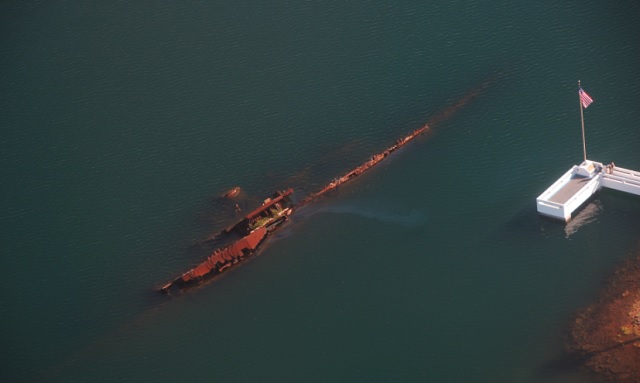
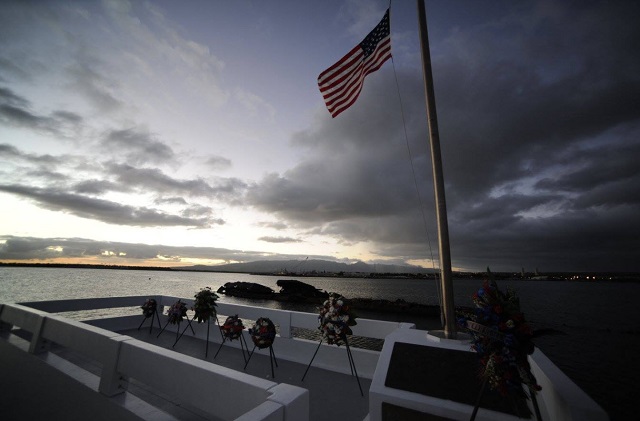
Today is the 70th anniversary of the attack on Pearl Harbor. It will also be the final one for the Pearl Harbor Survivor's Association, which will disband on December 31st, 2011, ending its 53-year existence. There may only be around 2000 or so men left of those who were at Pearl that Sunday morning. Today, we remember those who fought, those who died and those vanishing few who remain.
1
Clearly that is DD-. I'm not sure what the designation of the missing front half is though....Ouch!
Posted by: David at December 06, 2011 04:52 PM (+yn5x)
2
Is this the one that turned in front of the Australian carrier?
I think that the DD that was hit had a helicopter hanger though.
Posted by: jon spencer at December 06, 2011 05:27 PM (hFoyt)
3
I'm guessing its the Murphy (Murphie?)...or at this stage in her career the Murp.
The bow of the Murphy is, IIRC somewhere off Delmarva and is a well known site because divers for years were looking unsuccessfully for the rest of the ship.
Posted by: brickmuppet at December 06, 2011 05:30 PM (EJaOX)
4
Brickmuppet for teh win! The USS Murphy (DD-603) was on convoy escort duty, approximately 75 miles out from New Jersey when she encountered the SS Bulkoil at night. The Bulkoil was heading back to port after experiencing an engine failure when she heard a "torpedo" to port on her sound rig. Naturally, she turned into the "torpedo" so as to decrease her profile.
Problem is, the "torpedo" she heard was the Murphy, tracking a sonar contact of her own out ahead of the convoy. The Bulkoil hit the destroyer just behind the bridge and cut through, shortening her by about 70 feet. The bow portion sank in just a couple of minutes, taking 36 souls with it. The stern section stayed afloat, was towed back to New York Navy Yard, and seven months later emerged with a new forward section.
She served at D-Day then was eventually assigned to the Pacific Fleet where she was, apparently, one of the first (if not THE first) American vessel to reach Nagasaki after the bomb.
Posted by: Wonderduck at December 06, 2011 07:12 PM (2YMZG)
Posted by: brickmuppet at December 06, 2011 07:18 PM (EJaOX)
6
To clarify my request: Only as it applies to one of your illustrations in this post.
Posted by: brickmuppet at December 06, 2011 07:24 PM (EJaOX)
7
David, you are thinking of HMAS Voyager that was cut in half by HMAS Melbourne. It also collided with USS Frank E Evans (obviously not at the same time).
Posted by: Carpe Jugulum at December 07, 2011 12:31 AM (ErkRV)
8
Actually, I wasn't thinking of any ship in particular. It was just obviously the rear "half" of a destroyer, and I felt like making some kind of comment.
I was also assuming that the damage was from a torpedo hit, not a collision, which explains why my search didn't lead me to an answer.
Posted by: David at December 07, 2011 10:36 AM (+yn5x)
In December of 1941, when the United States joined the rest of the
world's industrialized nations in the first truly globe-spanning war,
there was a tremendous range of single-seat fighters both in use and
under design everywhere. However, to paraphrase a later persona, you go
to war with the military you have, not the one you wish you had. What
was a nation's front-line fighter plane in 1942 was obsolescent in 1943
and a death trap a year later. This entry will examine the best fighter
planes from the "early years," and decide which of them is the best.
Bear in mind, however, that in the hands of a talented pilot any one of
these planes could beat any of the others. None of them could be
considered a "dog," just perhaps not quite as good as the eventual
winner.
As previously mentioned, the US gets two planes, one from the Navy
and one from the USAAF, since the two services had completely different
design criteria which generated completely different fighters. The
Japanese, Germans and British get one entry each.
The entries are presented in no particular order. Let's get on with it.
The biggest reason the P-40 did so well early in the war was because its pilots were very well trained and knew the plane. A squadron of P-40's fought out of Henderson Field for a while, and did very well against the Zero even though the Zero really was a much better plane.
I agree that the Zero was the best fighter of the early war.
Posted by: Steven Den Beste at December 01, 2011 11:39 PM (+rSRq)
2
SDB, I think the same argument can be made for the early success of the Zero as you made for the 40. But in any discussion of this type, my tendency is to look at the characteristics of the bird versus the ideal list of my wants. Then the preference for rugged and heavily-armed comes into play....
Posted by: The Old Man at December 02, 2011 06:10 AM (TcNy+)
3
It looks like you have a picture of an F4F-3. It clearly has "F-3" on the side, and I don't see any sign of the wing joints. That minor nit aside, great article, and great pictures. They all look like they were taken somewhat recently, I wonder how recent the BF109 and A6M pictures are, given that I don't believe flyable versions of either exist anymore.
I'd have to argue on throwing out the BF109 so early, just based on the results it achieved. I'd put it into the top three with the Spitfire and Zero.
Posted by: David at December 02, 2011 10:30 AM (+yn5x)
David, that would actually be the squadron markings, not the type number, though technically it's incomplete. The correct number would be X-Y-Z, where X is the Air Group Number, Y the plane type (Fighter, Bomber, Scout, Torpedo), and Z the plane number in the squadron. So in 1942, 6-F-12 would be the 12th plane of the fighter squadron of the USS Enterprise's air group.
Posted by: Wonderduck at December 02, 2011 11:20 AM (OS+Cr)
There were no P-40s serving at Henderson Field during the Battle for Guadalcanal. They had the P-400, which was a bastardized export version of the P-39. Almost completely unsuitable for air combat (All the more so because they had no ground equipment to keep their oxygen system charged.), but its heavy armament and payload made it invaluable for ground support. The pilots there learned the hard way to leave tackling the Japanese aircraft to the F4Fs.
The A6M was very maneuverable but at high speeds or high attitudes, that maneuverability almost completely disappeared to the point of the aircraft being uncontrollable. That was why Japanese pilots were reluctant to go into steep dives in the Zero.
Finally, it is easy to overemphasize the importance of maneuverability in a fighter. Pilot skill and tactics often were far more determinative of the fighter's performance - which aircraft had greater maneuverability was only critical for the few pilots pushing the edge of the performance envelope.
Posted by: cxt217 at December 02, 2011 04:29 PM (Zye/c)
The genius of the Thach Weave was that it pretty much eliminated the value of maneuverability, and instead emphasized weapons and armor, in which areas the F4F (and pretty much all later American fighters) vastly outrated the Zero.
Also, this is from Fire in the Sky:
In April 1943 No. 15 Squadron (RNZAF) arrived on Guadalcanal with P-40s. RNZAF fighter squadrons took part in many of the fierce engagements triggered by each new U.S. Landing farther up the Solomons. These engagements did much more than the Guadalcanal campaign to damage the JNAF, and by the time the JNAF abandoned Rabaul in April, New Zealand fighters had claimed ninety-nine kills
Posted by: Steven Den Beste at December 02, 2011 05:02 PM (+rSRq)
7
Regarding the suitability of P-39 for air combat, there's a funny picture here:
http://wio.ru/aces/rechkalov.htm
Every star on that cowling is a downed German aircraft (quite a few were 109s).
Posted by: Author at December 02, 2011 08:41 PM (G2mwb)
8
I had forgotten that the P-40 saw such wide use early in the war.
I do remember that the American Volunteer Group ('Flying Tigers') were taught to climb high and dive towards the Japanese planes they fought. At least, that was mentioned in the book I read, way back in high school.
Chennault (leader of the AVG) was big on using that advantage of the P-40.
About the Spitfire, Bf109, and A6M2: the mix of guns with different convergence zones is surprising. Did the pilots have the ability to select which set to fire? Or did they have to fire both at once, and hit with whichever one was aimed right?
Posted by: karrde at December 03, 2011 08:04 AM (+Zz5p)
9
The Spitfire did not; it either fired all guns or none at all. The other two could select to fire one type or the other (or both).
Posted by: Wonderduck at December 03, 2011 09:04 AM (2YMZG)
10
P-39 originally had the fire selectable, but in Russian service it was modified to all-or-nothing, as were domestic fighters (such as Yak). I am not sure exactly why it was done, perhaps it had to do with flying in heavy gloves.
Erich Hartmann said that he preferred minimum range shots.
Posted by: Author at December 03, 2011 02:35 PM (G2mwb)
11
Conventional wisdom is that the Spitfire had a better turning radius than the Me-109. In actual tests run between captured Spits and Me-109s, though, the Germans found that the 109 had a better turning radius at most altitudes and speeds. Because of the huge firepower advantage of the Emil, I would eliminate the Spit before the Emil.
As far as the Zeke, it had a really poor roll rate, especially before the reduction in wing size with the Model 32. It's a remarkable technological achievement, but I'd take the Emil every day of the week and twice on Sunday, so long as operational radius wasn't my primary consideration.
And the Emil is clearly better looking than that effete Spitfire.
8-)
Posted by: Doug Sundseth at December 03, 2011 02:36 PM (xdhJI)
12The Brits disagree with you, Doug, as does every single reference book I have over here. The Japanese tested the A6M2 against the Bf109 (I can't find out which version), and according to them the only place the German fighter had any edge was in top speed.
I'll point out again that any of these planes could shoot down any other in the contest. We're talking tiny percentage points differences between the top three.
Some time ago, I mentioned that I had a "What If...?" post I had to let go because I didn't know enough of the history involved. The basis of that post was "What If... the Germans had replaced their 109s with Zeros at the Battle of Britain?" I suspected the difference would have been huge, but I couldn't (and still can't) track down all the various permutations that change would cause.
Posted by: Wonderduck at December 03, 2011 04:03 PM (2YMZG)
13I want to say that the information came from a comment by Galland, but it was about 15 years ago when I read it (back when I was playing Mustangs and Messerschmitts seriously) and I have no idea how to find it now. IIRC, it's related to the behavior exemplified in this (from your link*):
"I had survived this mission simply
because the Spitfire could sustain a continuous rate of turn inside the
BF 109E
without stalling - the latter was known for flicking into a vicious
stall spin without prior warning if pulled too tightly.
The Spitfire would give a shudder to signal it was close to the edge,
so as soon as you felt the shake you eased off the stick pressure."
A good pilot could fly the 109 right on that edge, while an average pilot had to fly a few percent below that performance. With a Spit, even a relatively average pilot could hang on the performance edge. When combined with the 109s flying at the end of their endurance over England and the Spits flying over their own fields, the result was the performance differential that's usually reported.
"I'll point out again that any of these planes could shoot down any other
in the contest. We're talking tiny percentage points differences
between the top three."
Oh, clearly. To a large extent, the aircraft of the major combatants were direct responses to the challenges they faced during the war. The Japanese and Americans prioritized operational radius, the Japanese by sacrificing defense and the Americans by sacrificing maneuverability. American aircraft started significantly behind those of the Japanese and the Europeans, largely because of political concerns. The Germans and British sacrificed range for maneuverability or firepower.
The primary reason I'd choose a 109 over a Zero is that with good tactics, P-38s, P-40s, and F4Fs eventually attained something like loss parity with the Zero. And US experience in North Africa indicates that none of those aircraft could match the 109.
I'm treating this comment section in much the way I would treat the grognard discussion you alluded to in the first post in this series. And it wouldn't be that kind of discussion without disagreements opaque to anyone not in the in-group.
FWIW, when this is done, I'm willing to put forward the case that the Sherman is the most under-rated tank in WWII, (and arguably the best tank in WWII) as well**. 8-)
* An excellent data source, BTW, that I've not seen before.
** Seriously, not facetiously, but not based on which tank would win a tank duel.
Posted by: Doug Sundseth at December 03, 2011 10:14 PM (xdhJI)
Posted by: Steven Den Beste at December 03, 2011 11:24 PM (+rSRq)
15
Yes. the only tanks that could conceivably belong in this thread are the flying tanks from the 1930s and they were even worse dogfighters than they were tanks. So they wouldn't win anyway.
Posted by: brickmuppet at December 03, 2011 11:42 PM (EJaOX)
16
I thought brick was joking. I was wrong. That's insane! I can very well appreciate why the Soviets ordered one of the designers to take a ride on one of those contraptions after a prototype disintegrated on landing...
I don't really know enough about fighters to have any strong opinions about them, except to follow the simple rule: the point of fighters isn't to dogfight, it's to assert and defend air supremacy over a theatre. That can be highly dependent on local conditions - logistics considerations, range, fuel efficiency, anti-aircraft artillery deployment, etc. What was the relative maintenance profiles of these aircraft, for instance?
Posted by: Mitch H. at December 04, 2011 08:20 AM (pvALX)
Even within the IJN in the discussions which led to the development of the Zero, there were experienced pilots who believed the emphasis on maneuverability to the detriment of other traits in a fighter design was a bad idea, and that inadequate maneuverability in a fighter could always be compensated for by improved pilot skill. Ultimately, those pilots were proven correct.
It is worth noting that most pilots did not push their aircraft to the limit. In that sense, arguments over the whether one fighter was more maneuverable tend to lead into a blind alley.
And as Len Deighton once noted, a common trait of all the highest-scoring aces like Hartmann was a willingness to get really close before opening fire on their targets. That fact led to one of the few peeves pilots had with the Spitfire - the mounts for the machine guns were simply too narrow to converge the fire of all the machine guns as close as the pilots wanted.
Posted by: cxt217 at December 04, 2011 06:05 PM (Zye/c)
18
With the correction that it's the turn rate that's important, not turn radius, Spit still won. Another important advantage that it had was that it shed energy slower than the competition (Mustang was the absolute champion though: it even had a maneuvering flap setting).
Posted by: Author at December 04, 2011 11:29 PM (G2mwb)
19
I just got emailed this, and it seemed relevant to this post... just about every plane mentioned appears at some point in the video, I think. Now excuse me, I'm going to go see if I can figure out how to get to England this summer..
Which Fighter Is Best? Part I: Introduction
If you stick two or more WWII otaku in a room, supply them with beer and pretzels and a suitable collection of Avalon Hill games, close the door and walk away, three things will happen:
1) the beer will disappear;
2) a game will be played (probably not Source of the Nile, however);
3) an argument will break out.
Unless the argument is about the rules of the game being played ("Of course a T-34/85 can move in a lake hex... the rules don't say it can't!"), it will invariably be one about "which is best". Best tank, best rifle, best navy, best game, best way to carry dice (Crown Royal bag), best infantry, the topics one can choose from are endless.
Except amongst the grognards I know, the discussion always veers to "best fighter." There would never be any structure to these arguments, devolving quickly to people championing their favorite plane, sometimes (depending on the amount of beer consumed) quite heatedly. Almost always the answer would end up being the P-51 Mustang, because, well, look at it!
But is it really the best fighter of World War II?
Steven, what other plane used the Pfeil's layout? There were, obviously, a lot of pusher configuration planes, but very few t/p military aircraft that I'm aware of.
Posted by: Wonderduck at November 28, 2011 11:23 PM (2YMZG)
6
Another dividing line (which I admit is outside your parameters) is by the mission performed by the aircraft. A plane which is a great short-range interceptor might not be good if employed on offensive fighter sweep, bomber escort, or ground attack missions...
Posted by: Siergen at November 28, 2011 11:32 PM (OSPjN)
Now the configurations of those others are not exactly the same as the Do
335, but it shows that the idea of a pusher-puller configuration was in the air,
though no one ever really made it work well.
Posted by: Steven Den Beste at November 28, 2011 11:42 PM (+rSRq)
8
Spitfire or Hurricane? (grin, duck, flee for life)
Posted by: Avatar_exADV at November 28, 2011 11:53 PM (pWQz4)
That's not controversial. The Spitfire was unquestionably better than the Hurricane, even early in the war. Later versions of the Spitfire were even better.
The main reason the Hurricane was important during the Battle of Britain is that the UK had twice as many Hurricanes as Spitfires. So the Spitfires tried to keep the 109's busy, so that the Hurricanes could attack the German bombers.
Posted by: Steven Den Beste at November 28, 2011 11:55 PM (+rSRq)
10
Any room for the Messerschmitt Bf-109 E or even the K?
How about the Focke-Wulf 190 D?
Posted by: Geirr at November 29, 2011 12:41 AM (vC/2p)
11
Not a fighter, but I've always been in love with the B-25 Mitchell. I mean, with up to 18 forward-facing .50's (If you aim the turrets forward) it's the 1940's equivalent of a disintegrator beam.
And who else could field a 75mm Howitzer until the AC130 gunship?
Posted by: Mauser at November 29, 2011 03:53 AM (cZPoz)
Can I add the P-40, as used in China by the American Volunteer Group?
It's an American plane flown by Americans in the Chinese theater of the war against Japanese. And it had the most amazing paint-job ever seen on a WWII aircraft.
But I don't know where it would fit. And I'm not sure it compares, in performance terms, to the other planes in the war.
Posted by: karrde at November 29, 2011 07:35 AM (YjM//)
13
@#8+#9: Avatar, Steven, remember the rules... "planes won't appear in both Early and Late contests." I even specifically mention the Spitfire; we might be seeing the Hurricane anyway!
@#7 Steven: So, no planes with a pusher/tractor config that flew more than prototypes.
@#11: Maybe I'll do a "medium bomber" thing. Not likely, but maybe.
Posted by: Wonderduck at November 29, 2011 07:47 AM (2YMZG)
Imo, the P-51 is the best fighter of WWII period. It's range plus combat performance was unmatched.
I refuse to list any Japanese fighter as 'best' because they sacrifice pilot safety for performance. They were deathtraps.
Posted by: TBlakely at November 29, 2011 08:47 AM (GAYHS)
15
FW-190 took a long time to reach the front service. It's a late-war plane for all practical purposes.
A. Yakovlev wrote in his memoir that during the infamous visit of 1940, Kurt Tank got drunk and bragged how he developed an airplane that could reach 700 km/h. When asked about it next morning, he said that the arplane has just suffered an accident and cannot be demonstrated. Hur hur hur.
Posted by: Author at November 29, 2011 12:20 PM (G2mwb)
16
I, too, think that P-47 was underrated. However, being underrated it still wasn't the best. The biggest downside, IMHO, was how one had to be Robert S. Johnson to get results with it. P-39 was well-liked in Russia and produced a few aces. And Yak-3 of course was an amazing sports car of a fighter, too. Neither of those was as good as P-51.
Posted by: Author at November 29, 2011 12:24 PM (G2mwb)
Gotta take the Jug and P-38, followed by the Bearcat and the Corsair. I'm a big believer in ruggedness married to firepower. 11/11 I talked to a guy who had flown both the Jug and the Pony. Claimed the Jug was the toughest bird in the air and the 51 was a sweetheart to fly...
Besides, those 12 hour missions in a 51 would bloody MURDER my 'roids...
You know how to open those cans-o'-worms, doncha Duck?
Posted by: The Old Man at November 29, 2011 12:53 PM (TcNy+)
18
I do, as a matter of fact. Alas, the F8F Bearcat never made it into WWII, so it can't be considered. Ditto the F7F Tigercat.
Posted by: Wonderduck at November 29, 2011 01:29 PM (OS+Cr)
Early British is always the Spitfire - though as others have pointed out, the Spitfire may have been less cost effective than the Hurricane (For example, from production and servicing standpoints, you could build ~566 Hurricanes for 20,000 man-hours versus ~290 Spitfires for 24,000 man-hours.). Late war British was the Tempest (Although the fighter/fighter-bomber versions of the Mosquito almost won out.).
Posted by: cxt217 at November 29, 2011 03:35 PM (VVfk8)
Not a fighter, but I've always been in love with the B-25 Mitchell. I
mean, with up to 18 forward-facing .50's (If you aim the turrets
forward) it's the 1940's equivalent of a disintegrator beam.
The strafer version of the B-25 wasn't the original configuration. It was actually a hack developed in Australia. They'd been given B-25's, but they were useless for the kind of war being fought in New Guinea. So the general in charge of air resources there let one of his guys, one Pappy Gunn, and he decided to completely change the mission.
He's the one who got rid of the bombardier, loaded a pile of machine guns in the nose, and so on. The result was so successful that North American sent a group of engineers to Australia (no easy trip at the time) to see what he'd done.
Then they came back to the US and deliberately designed a strafer version of the B-25 to manufacture.
It's one of the cooler stories of the war. But the B-25 strafer isn't a fighter, so it isn't relevant to this thread. (Alas.)
Posted by: Steven Den Beste at November 29, 2011 03:54 PM (+rSRq)
21
I recall reading Saburo Sakai's autobiography where at the close of the war he was assigned to a squadron with one of the late-war Japanese fighters that wasn't a deathtrap (resealable tanks, etc.) and that he took down a B-29 with it. I'd say Shinden, but that doesn't seem right somehow.
Mauser: For ground attack, though I love the Ilyushin Il-2 Shturmovik, nothing beats the Hs129 B3 as far as sheer audacity and coolness of potential - a purpose built single-seat twin-prop ground attack aircraft mounting a 75mm AT gun. (http://en.wikipedia.org/wiki/Henschel_Hs_129)
Posted by: Civilis at November 29, 2011 05:24 PM (oFqV0)
22
Mauser, many years ago I saw a Canadian Warbird Heritage B-25 at the Oshkosh fly-in that was piloted by someone who know how to make the most of it. He was flinging that thing around close to the ground like it was a fighter; I was very impressed. I just wish I'd had a movie camera handy - I doubt I'll ever see one flown like that again...
Posted by: Siergen at November 29, 2011 05:39 PM (OSPjN)
USN - F4F, since there's really no other choice. That is to say, "None".
USAAF - P-47
RAF - Spitfire
Luftwaffe - FW-190A (Easily the best early war fighter, given that "early war" goes into 1943. If the 190 is chosen for late war, then Me-109E, since the Emil was arguably the best WWII fighter until the FW-190 entered service.)
Japan - Zero-sen
Late War:
USN - F4U
USAAF - P-51D
RAF - P-51 (First used in British service and the Merlin makes it British -- yes, it's a stretch. 8-) )
Luftwaffe - FW-190D
Japan - None
USSR - None
So, for the argue-off, do we consider the best available variant, regardless of date of entry (for those aircraft that spanned both periods) or only the best available by the end of the period. If the former, then aircraft with wide capability variance might arguably be better entered as separate aircraft in each period. (FW-190A and D and Spitfire Mk. whatever come to mind.)
Posted by: Doug Sundseth at November 29, 2011 07:01 PM (xdhJI)
24
Russians never thought much about the combat effectiveness of He.129. It was considered a paper tiger. It arrived late in the war, when Russian air cover was much better, fighters were heavily armed and flown better. The 129 did not do much against Russian tanks.
As far as B-25 with 75mm, Jack Ogilvie wrote this:
"Yes I remember those flights very well, I think I was on all of them.
They were not bomb runs,those were B-25's that were fitted with 75 mm
cannons and they were trying to knock out some flak boats that were in
the harbor at Leghorn. They had a gun emplacement on a point going in to
the harbor that had two 105's and several 88's. They were the most crack
shot's I ever saw. They had a gung ho full colonel that was in charge of
the Squadron and he had us come to the briefing. His plan was to go in
with three flights of four planes and to go in four at a time stacked
one behind the other on the deck,we were to be circling above them. I
tried to talk them out of it and he got mad as hell. When we started in
and were maybe a mile out those 105s shot four rounds and knocked down
four planes-the rest scattered and aborted the mission. The colonel had
another meeting and ranted and raved and threatened court-martials for
cowardice. He said he was going to do the same thing the next day and
would lead the flight. He did and the first round was a direct hit on
his plane. As far as I know they were never used again."
The story of cannon-armed B-25 stuck with me because it was such a disappointment. Americans were supposed to fight smart, not like this. Of course I did not know about the "Flight to Nowhere" back then.
Posted by: Author at November 29, 2011 07:48 PM (G2mwb)
25
There are idiots in every branch of every military in the world.
Keep the comments coming, folks! You've already forced me to reconsider one of the planes for the "Early" fighters... which is forcing me to postpone the entry until tomorrow.
Posted by: Wonderduck at November 29, 2011 07:53 PM (2YMZG)
Civilis, the Shinden never saw combat. The first test flight was three days before Hiroshima. There were only three test flights altogether, totaling about 45 minutes of air time.
It was probably the Ki-61, which did have self-sealing fuel tanks.
Posted by: Steven Den Beste at November 30, 2011 12:41 AM (+rSRq)
27
SDB: IIRC, the Australian modified B-25's had the extra gun mounts in the wings, which was never an official configuration, and the engineers didn't think the structure could support it properly, so they came up with the nose mount, in both 4 and 8 gun flavors. Plus there were nacelles around the fuselage for guns, which required steel reinforcement plates on the skin to protect from the muzzle blast.
They were also successful at "Skip Bombing", which is a trip to see film of.
There's a lot of stuff on YouTube.
Posted by: Mauser at November 30, 2011 06:38 AM (cZPoz)
28
Well, the book "Fire in the Sky" says that the original Australian B-25 strafers mounted the extra machine guns on the outside of the nose of the plane.
Posted by: Steven Den Beste at November 30, 2011 10:13 AM (+rSRq)
Posted by: Siergen at November 30, 2011 07:34 PM (TR6md)
32
I suppose the P-47 doesn't really rate "best". But what other fighter plane has an enemy destroyer to its credit?
Those two guys from the Tuskegee Airmen were flying P-47's when they sank a destroyer in the Adriatic. (The TV movie had them flying P-51's, but that squadron didn't get P-51's until later.)
This was after Italy surrendered, and the destroyer in question was originally Italian but was reflagged and recrewed by Germany.
I've watched that gun-camera film several times, and I've come to the conclusion that one of the machine gun rounds set off the warhead on a torpedo. Of course, that would then set off all the others in the rack, and the resulting explosion was more than sufficient to blow the ship in half.
I don't know of any other case like that in the war.
Posted by: Steven Den Beste at November 30, 2011 11:35 PM (+rSRq)
33
Come to think of it, late war fighters which were carrying rockets or bombs might well have bagged destroyers. But that P-47 was using its machine guns.
Posted by: Steven Den Beste at November 30, 2011 11:36 PM (+rSRq)
34
Hmmm, the P-38 Lightning qualifies for BOTH periods.
Posted by: Mauser at December 01, 2011 03:25 AM (cZPoz)
35
US Late war (1944-on):
The Seahawk without floats!
Posted by: brickmuppet at December 03, 2011 03:21 PM (EJaOX)
36
Hey! I just found another push-pull airplane. Even better, it's got a canard!
Attention To Orders
I would like to call your attention to the creation of a new category here at Wonderduck's Pond. It's been a long time coming, and it's an even longer time overdue, but I'm happy to finally announce the debut of the "Military History" category. It'll take some time to get everything sorted out and filed away, but now there's someplace to put my military stuff other than the "various" bucket.
I'm actually surprised at how much MilHist stuff I've written... should have done this a long time ago.
Also, if you can get the right balance between lack of sleep and cold medicine dosage, your blog articles flow together into one continuous stream of consciousness. Seriously, the F1 racers were beating the crap out of the rubber ducks at Midway, but then Rio starting altering probability again...
Posted by: Siergen at November 08, 2011 09:18 PM (sOpcO)